June 08, 2026
10 Leading Generative AI Development Services in Australia for Scalable AI Solutions
Artificial intelligence is transforming global digital infrastructure, pushing traditional data centers into a new era of high-performance, AI-optimized environments. As enterprises adopt generative AI, machine learning, and advanced analytics, data centers must handle exponentially larger workloads with greater efficiency, security, and sustainability. To meet these demands, AI data center companies are engineering next-generation facilities equipped with accelerated computing hardware, intelligent cooling systems, and automation technologies that support continuous AI operations at scale.
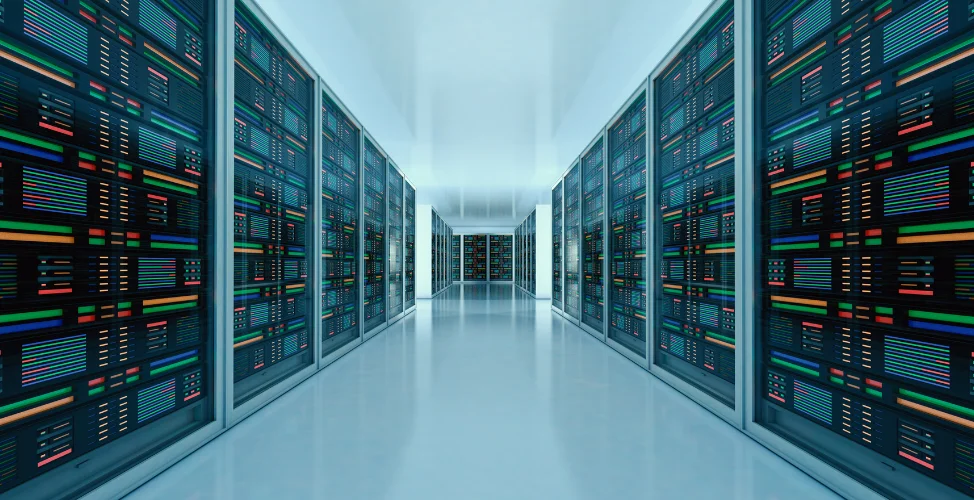
From GPU-powered computing clusters to AI-driven energy optimization, these companies are shaping the backbone of modern digital transformation. Their innovations are essential for training large language models (LLMs), powering cloud platforms, enabling edge computing, and supporting global enterprise workloads.
SmartOSC plays a strategic role in this evolution by helping enterprises design AI-ready cloud infrastructure, integrate automation frameworks, and optimize computing performance for scalable, AI-first digital transformation.
Highlights
- AI data center companies are redefining computing efficiency through high-performance hardware, sustainability initiatives, and intelligent automation.
- The rapid rise of generative AI and LLMs has accelerated global demand for AI-optimized infrastructure.
- SmartOSC enables enterprises to build scalable, energy-efficient, and AI-ready data environments that support analytics, automation, and cloud modernization.
Understanding AI Data Centers
What Are AI Data Centers?
AI data centers are high-performance, next-generation computing environments designed to handle the immense computational demands of artificial intelligence, machine learning, high-performance computing (HPC), and real-time analytics. Unlike traditional data centers that rely mainly on CPUs, facilities built by leading AI data center companies incorporate GPUs, TPUs, high-bandwidth networking, and distributed storage systems to efficiently process large-scale, parallel workloads. These advanced architectures enable faster model training, lower latency, and superior scalability for modern AI-driven applications.
These facilities also employ sophisticated cooling solutions such as liquid immersion cooling, direct-to-chip cooling, and AI-driven thermal automation to optimize energy usage and maintain peak hardware performance. As AI workloads grow more complex, AI data centers provide the scalability, speed, and reliability required for continuous AI model training, inference, and experimentation. This infrastructure is particularly important for organizations and an AI agent development company building advanced autonomous systems, as AI agents require significant computing resources to process large datasets, execute real-time reasoning, and support multi-agent workflows at enterprise scale.
Why AI Is Transforming Data Center Infrastructure
AI is reshaping the way data centers are designed, built, and managed, introducing autonomy, predictive intelligence, and unprecedented performance capabilities. Key advancements include:
- AI-driven cooling and energy efficiency systems that optimize power usage in real time
- Predictive maintenance powered by machine learning to detect failures before they occur
- Autonomous operations that automate monitoring, resource allocation, and fault management
- Scalable GPU clusters designed for large-scale training of foundation models and LLMs
According to insights from Hanwha Data Centers and reporting from WIRED, AI-ready data infrastructure is becoming a cornerstone of the global economy, supporting sectors from manufacturing to finance, healthcare, logistics, and cloud computing.
Key Features of an AI-Optimized Data Center
High-Performance Computing (HPC)
AI-optimized data centers are built on high-performance computing architectures designed for massive parallel processing. Leading ai data center companies use multi-GPU servers, distributed computing frameworks, and high-bandwidth interconnects to support advanced model training, complex simulations, and large-scale inference workloads. These powerful architectures enable enterprises to accelerate innovation cycles, process enormous datasets, and achieve performance levels that traditional CPU-based environments simply cannot match.
Intelligent Cooling Systems
To manage the tremendous heat generated by GPUs and AI accelerators, AI data centers rely on intelligent cooling technologies. AI-driven thermal algorithms continuously monitor temperature patterns and adjust cooling output dynamically, maximizing energy efficiency while preventing hardware degradation. Solutions such as direct-to-chip cooling, liquid immersion systems, and automated airflow optimization contribute to reduced energy consumption and improved system reliability.
Scalability & Automation
AI workloads often fluctuate based on model training and inference demands, making seamless scalability a necessity. Modern facilities built by leading AI data center companies provide elastic compute resources that automatically scale up or down across hybrid cloud, multi-cloud, and edge environments. Advanced automation frameworks manage resource allocation, workload placement, and real-time system tuning, ensuring optimal performance, reduced latency, and minimal manual intervention for enterprise AI operations. These capabilities also support broader AI business process automation initiatives by providing the scalable infrastructure needed to run intelligent workflows, process large volumes of data, and automate decision-making across enterprise functions.
Sustainability Focus
Sustainability is a key priority in modern data center design. AI-optimized facilities employ energy-efficient power distribution systems, renewable energy integration, heat reuse technologies, and carbon-aware workload scheduling. By incorporating AI-driven energy management tools, these data centers reduce environmental impact while maintaining high-performance compute capabilities, aligning with global sustainability standards and corporate ESG goals.
Security & Compliance
Security in AI data centers goes far beyond perimeter protection. These facilities embed advanced cybersecurity frameworks, continuous anomaly detection, AI-enhanced intrusion prevention, and automated threat response systems. With increasingly strict data privacy laws such as GDPR and CCPA, AI data centers also provide strong governance, encryption, audit trails, and real-time compliance monitoring. This ensures that sensitive data used for AI workloads remains protected, traceable, and compliant across regions.
Watch more: AI Agent vs Chatbot Explained: Key Differences, Benefits, and Use Cases
Top 10 AI Data Center Companies Powering the Future of Cloud and Computing
1. NVIDIA
NVIDIA is widely recognized as a global leader in AI computing and a driving force behind modern data center innovation. As one of the most influential ai data center companies, NVIDIA’s advanced GPU technology powers everything from generative AI training to large-scale supercomputing clusters, enabling enterprises to run high-performance, AI-optimized workloads with unmatched speed and efficiency.
Innovations: NVIDIA DGX systems, Grace Hopper Superchips, and end-to-end AI Enterprise software.
Core offerings: GPU servers, high-speed networking (InfiniBand), and AI cloud infrastructure.
Industry impact: NVIDIA enables enterprises and hyperscalers to train and deploy AI models faster with unmatched performance.
2. Google Cloud
Google Cloud’s AI-first data center strategy leverages TPUs, DeepMind energy optimization, and advanced analytics to deliver sustainable computing environments.
Innovations: Tensor Processing Units (TPUs), carbon-intelligent computing, and ML-powered cooling.
Core offerings: AI infrastructure, TensorFlow Cloud, BigQuery ML.
Industry impact: Google operates some of the world’s most energy-efficient and environmentally responsible AI data centers.
3. Microsoft Azure
Azure integrates AI computing, hybrid cloud ecosystems, and edge infrastructure to support enterprise-scale AI adoption.
Innovations: Azure OpenAI Service, HPC clusters, and liquid cooling initiatives.
Core offerings: AI infrastructure, ML automation, and responsible AI governance.
Industry impact: Azure supports secure, scalable AI deployments for global enterprises across multiple industries.
4. Amazon Web Services (AWS)
AWS leads the cloud computing market with highly versatile, scalable, and globally distributed AI infrastructure. As one of the top ai data center companies, AWS provides advanced compute options, including GPU and TPU alternatives, that support everything from large-scale model training to real-time inference, making it a preferred choice for enterprises building AI-driven applications worldwide.
Innovations: Custom silicon chips Trainium and Inferentia designed specifically for AI training and inference.
Core offerings: EC2 ML instances, SageMaker, on-demand AI resources.
Industry impact: AWS’s massive global network enables enterprises to deploy AI across regions rapidly and cost-effectively.
5. Meta
Meta invests heavily in AI-first data center modernization, including its AI Research SuperCluster (RSC), one of the most advanced AI training systems in the world.
Innovations: RSC supercomputer, open-source AI frameworks, green energy initiatives.
Core offerings: AI training infrastructure and specialized GPU clusters.
Industry impact: Meta’s infrastructure advances the frontier of large-scale AI research, powering computer vision and LLM development.
6. Equinix
Equinix provides global interconnection, hybrid cloud services, and AI-ready colocation environments.
Innovations: Bare metal servers, global Fabric interconnection, optimized edge locations.
Core offerings: Hybrid AI infrastructure and private data exchange environments.
Industry impact: Equinix enables frictionless AI data exchange between enterprises, partners, and cloud providers.
7. Digital Realty
Digital Realty supports enterprise AI acceleration through intelligent infrastructure and high-density computing environments. As one of the leading ai data center companies, it provides scalable colocation, robust interconnection ecosystems, and power-optimized facilities that enable organizations to run demanding AI, ML, and data-intensive workloads with reliability and efficiency.
Innovations: Sustainable data center design and AI workload optimization.
Core offerings: Colocation services, interconnectivity, and AI data processing facilities.
Industry impact: Digital Realty blends sustainability with performance to support next-generation cloud and AI computing.
8. CoreWeave
CoreWeave has rapidly become a leading GPU cloud provider, especially for generative AI and machine learning startups.
Innovations: Flexible GPU leasing and optimized deep learning clusters.
Core offerings: On-demand GPU infrastructure for AI training and inference.
Industry impact: CoreWeave accelerates AI product development by offering accessible, high-performance GPU computing.
9. Supermicro
Supermicro builds AI-optimized servers and data center systems designed for extreme performance and energy efficiency.
Innovations: Liquid cooling, AI-ready rack systems, edge computing solutions.
Core offerings: GPU servers, HPC systems, and modular racks.
Industry impact: Supermicro delivers sustainable, high-performance infrastructure for global AI deployments.
10. Hanwha Data Centers
Hanwha is an emerging leader in sustainable, AI-driven data center development, emphasizing modular, energy-optimized architecture. As one of the newer ai data center companies, Hanwha focuses on building environmentally efficient facilities that support high-performance AI workloads while reducing power consumption, improving cooling efficiency, and enabling rapid, scalable deployment for modern enterprises.
Innovations: AI monitoring systems and renewable energy integration.
Core offerings: AI infrastructure consulting, modular data center design.
Industry impact: Hanwha combines green technology with automation to future-proof enterprise computing.
The Role of AI in Modern Data Centers
Artificial intelligence is quickly becoming the operational backbone of modern data centers, enabling facilities to manage unprecedented computing demands while maintaining high levels of efficiency, reliability, and security. Leading ai data center companies leverage machine learning, predictive analytics, and automation to help data centers operate more intelligently, reducing costs, improving performance, and supporting global sustainability standards. Below are the key ways AI is transforming, modernizing, and optimizing today’s data center environments.
AI-Driven Operations Management
AI enables fully autonomous or semi-autonomous operations by continuously monitoring system performance, resource utilization, and workloads across servers, networks, and cooling systems. Through real-time analytics, AI can automatically allocate compute resources, adjust thermal controls, balance workloads, and orchestrate workflows across hybrid or multi-cloud infrastructures. This reduces the need for manual intervention, minimizes human error, and ensures consistent performance even under fluctuating demand. These capabilities demonstrate the growing importance of AI for IT operations, where intelligent systems help organizations optimize infrastructure management, improve operational resilience, and proactively address issues before they impact business performance. AI-powered operations also help data centers achieve higher reliability, faster response times, and optimized infrastructure usage.
Predictive Maintenance and Uptime Optimization
Machine learning models are trained to analyze hardware behavior, environmental conditions, and performance metrics to identify early signs of component degradation or potential system failures. AI-powered predictive maintenance allows data centers to resolve issues before they result in outages, dramatically improving uptime and equipment longevity. From detecting abnormal fan speeds to predicting GPU performance drops, AI-driven insights enable proactive repairs and hardware replacements. This shift from reactive to predictive maintenance reduces operational disruptions, lowers maintenance costs, and ensures uninterrupted AI and cloud workloads.
Energy Efficiency and Sustainability
One of the greatest challenges for AI-driven workloads is energy consumption. AI technologies significantly enhance energy efficiency by optimizing power usage effectiveness (PUE), automating cooling systems, and distributing energy resources intelligently. AI adjusts cooling output based on real-time thermal patterns, minimizes unnecessary power draw during off-peak periods, and identifies opportunities to shift workloads to greener or lower-cost energy sources. These optimizations help data centers reduce operational expenses and support sustainability commitments, crucial as global energy demands rise with the growth of AI and advanced computing.
Enhanced Security and Compliance
AI plays a critical role in strengthening cyber security within modern data centers. Leading ai data center companies use machine learning algorithms to continuously analyze logs, network traffic, and user behavior, detecting anomalies, flagging suspicious activity, and triggering automated responses in milliseconds rather than hours or days. This dramatically reduces the likelihood of breaches and accelerates incident containment. AI-driven systems also streamline compliance by monitoring data flows, enforcing access controls, and generating detailed audit trails that align with regulations such as GDPR, CCPA, and industry-specific standards. As a result, AI-powered data centers are significantly more resilient against today’s rapidly evolving cyber threats.
Benefits of AI-Optimized Data Centers
Accelerated AI Model Training
AI-optimized data centers are built with high-performance GPU clusters, high-bandwidth networking, and distributed computing architectures that dramatically accelerate AI model training. These environments can process massive datasets in parallel, reducing training time for large language models, computer vision systems, and deep learning algorithms from weeks to days, or even hours. Faster training cycles allow enterprises to experiment more rapidly, refine models continuously, and bring AI innovations to market sooner. This competitive speed is essential for industries investing heavily in automation, predictive intelligence, and real-time analytics.
Cost and Energy Efficiency
AI-driven cooling systems, intelligent resource management, and automated workload distribution are helping modern data centers dramatically reduce energy consumption. Many leading ai data center companies rely on real-time analysis of temperature, humidity, and power usage to optimize cooling, activating systems only when needed, cutting operational costs, and extending hardware lifespan. AI also reduces unnecessary compute utilization by automatically reallocating workloads, minimizing cloud spend and preventing energy waste. The result is a data center that is not only far more cost-efficient but also significantly more environmentally sustainable, an essential advantage as g
Scalability for Cloud and Edge Workloads
AI data centers are designed for scalability across hybrid cloud, multi-cloud, and edge computing environments. As organizations expand their digital operations and AI workloads evolve, these facilities can dynamically allocate compute, storage, and networking resources in real time. This flexibility is made possible through the convergence of AI and cloud technology, which enables intelligent resource orchestration, workload optimization, and seamless scalability across distributed infrastructures. As a result, enterprises can support diverse workloads, from generative AI applications and real-time analytics to IoT processing and robotic automation, without compromising performance. Whether scaling vertically with more powerful accelerators or horizontally across distributed nodes, AI-optimized data centers ensure that enterprises remain agile and resilient in rapidly changing markets.
Improved Data Insights and Governance
AI enhances the way data is managed, governed, and utilized across the enterprise. Intelligent systems continuously analyze data flows, validate data quality, and detect anomalies that could impact operations or analytics. AI also supports compliance by monitoring data retention policies, enforcing access controls, and generating audit logs aligned with regulatory frameworks such as GDPR and SOC 2. By elevating data transparency and lifecycle management, AI-optimized data centers enable businesses to build trustworthy, high-quality data ecosystems that support advanced analytics, decision-making, and strategic planning.
Challenges Facing AI Data Center Companies
- Rising Energy Demands: AI workloads increasingly strain energy grids, requiring sustainable energy and smarter power distribution.
- Infrastructure Costs and Chip Shortages: The global demand for GPUs and AI accelerators has led to supply constraints and high procurement costs.
- Data Security and Sovereignty: Strict data privacy laws require region-specific compliance and robust security controls.
- Managing Complexity and Interoperability: Integrating cloud, edge, and AI systems remains a major challenge for global scalability.
See more: Top 10 AI Consulting Firms in the World: Compare Services, Clients, and Expertise
How SmartOSC Supports AI-Ready Infrastructure Development
SmartOSC helps enterprises build intelligent, scalable, and future-proof AI ecosystems by combining deep technical engineering with strategic digital advisory. With extensive experience in cloud computing, data architecture, and AI system integration, SmartOSC guides organizations through the full lifecycle of infrastructure modernization, ensuring they can support advanced AI workloads, improve operational efficiency, and accelerate digital transformation.
SmartOSC partners with enterprise teams to assess current infrastructure maturity, identify performance gaps, and design architectures capable of supporting advanced AI and Data Analytics workloads, automation, and high-performance computing. Their approach ensures organizations deploy systems that are secure, compliant, energy-efficient, and optimized for global scalability, creating a strong foundation for long-term AI-driven growth.
SmartOSC supports enterprises by offering strategic and technical guidance that complements the capabilities of leading ai data center companies, helping organizations build high-performance, scalable, and AI-ready infrastructure.
- Developing data strategies optimized for AI and large-scale computing: SmartOSC builds modern data architectures designed for speed, reliability, and interoperability. This includes data pipeline modernization, governance frameworks, and storage strategies tailored for AI training, real-time analytics, and multi-cloud workflows.
- Integrating AI automation, monitoring, and predictive intelligence systems: SmartOSC embeds automation and predictive intelligence into data centers, using AI to monitor performance, anticipate issues, and streamline resource management. This reduces manual workload, increases uptime, and ensures consistent compute performance across distributed environments.
- Building secure, compliant, and energy-efficient data architectures: Their solutions incorporate enterprise-grade security controls, encryption, access governance, and automated compliance monitoring. SmartOSC also integrates energy-efficient design principles to support sustainability goals and cost optimization.
- Supporting hybrid and multi-cloud environments for global scalability: By enabling seamless integration across AWS, Azure, Google Cloud, and private infrastructure, SmartOSC helps organizations scale globally with consistent performance and workload portability. This flexibility allows enterprises to optimize resources, reduce vendor dependency, and deploy AI workloads closer to end users.
For organizations evaluating next-generation infrastructure strategies, SmartOSC offers additional insights through its cloud and AI engineering capabilities, as well as a full suite of digital transformation services.
FAQs: AI Data Center Companies
1. What is an AI data center, and how does it differ from a traditional one?
An AI data center is designed specifically to support GPU-accelerated computing, AI workloads, and large-scale analytics. Unlike traditional CPU-based data centers, AI facilities use GPUs, TPUs, and advanced cooling systems to handle massive computational demands.
2. Which companies lead in AI data center innovation?
Companies like NVIDIA, Google Cloud, Microsoft Azure, AWS, Meta, and Equinix are global leaders due to their advanced AI hardware, automation frameworks, and sustainable infrastructure strategies.
3. How does AI improve efficiency and sustainability in data centers?
AI enables better energy optimization, predictive operations, autonomous system management, and smarter cooling, reducing both costs and environmental impact.
4. What industries benefit most from AI-powered data infrastructure?
Industries including finance, healthcare, digital commerce, logistics, manufacturing, telecommunications, and cloud services depend heavily on AI-optimized infrastructure for agility and growth.
5. How can SmartOSC help enterprises modernize their data ecosystems?
SmartOSC provides end-to-end consulting, infrastructure modernization, AI automation integration, and cloud engineering support to help enterprises build scalable, secure, and efficient AI data environments.
Conclusion
AI data center companies are reshaping the global digital economy by delivering intelligent, scalable, and sustainable computing infrastructure. As organizations adopt advanced AI capabilities, from generative AI to real-time analytics, the demand for AI-optimized data environments will continue to rise. SmartOSC empowers enterprises to design future-ready AI data ecosystems that maximize performance, strengthen compliance, and enable continuous innovation across the digital landscape. Empower your business with AI-optimized cloud and computing infrastructure. Contact us today to design your intelligent data ecosystem.
Related blogs
Learn something new today