August 04, 2026
Understanding Data Science vs Data Analytics for Korean Enterprises
Data has become one of the most valuable business assets for enterprises across South Korea. Industries such as manufacturing, finance, retail, healthcare, and eCommerce are increasingly relying on data-driven strategies to improve operational efficiency, enhance customer experiences, and accelerate innovation. As Korean enterprises continue advancing their digital transformation initiatives, the demand for technologies that can process, analyze, and generate insights from large datasets continues growing rapidly.
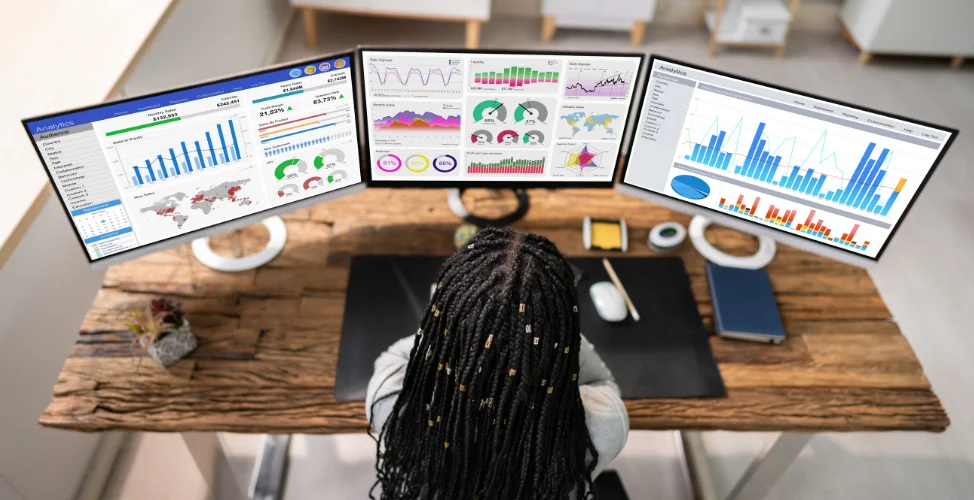
However, many organizations still struggle to understand the difference between data science vs data analytics. While the two disciplines are closely related, they serve different business purposes and require different tools, skills, and technologies. Understanding these differences is critical because selecting the right approach can significantly impact ROI, operational agility, talent investment, and long-term digital transformation success.
For Korean enterprises competing in highly digital and data-intensive markets, choosing between data analytics, data science, or a combination of both can shape how effectively businesses optimize operations, automate processes, and create competitive advantages.
Highlights
- Data science vs data analytics differ in scope, technologies, and business outcomes
- Korean enterprises increasingly use both disciplines for automation, forecasting, and strategic decision-making
- The right approach depends on business goals, data maturity, operational complexity, and industry requirements
What Is Data Analytics?
Definition and Core Focus
Data analytics focuses on examining historical and current data to generate actionable business insights that support smarter and more informed decision-making. Organizations use data analytics to identify patterns, monitor operational performance, and understand the factors influencing business outcomes. By analyzing structured data from various systems and processes, businesses can gain greater visibility into customer behavior, financial performance, operational efficiency, and market trends.
The primary goal of data analytics is to help organizations understand what happened, why it happened, and how existing processes can be improved. Most analytics initiatives focus on descriptive analytics, which summarizes historical performance, and diagnostic analytics, which identifies the root causes behind trends, inefficiencies, or operational challenges. Businesses often use dashboards, reporting platforms, and visualization tools to transform complex datasets into easy-to-understand insights that support both operational and strategic planning. According to McKinsey, data-driven organizations are 23 times more likely to acquire customers and 19 times more likely to be profitable compared to companies that rely less on analytics-driven decision-making.
Data analytics plays a critical role in helping businesses monitor KPIs, improve operational visibility, and support day-to-day decision-making across departments. Korean enterprises increasingly rely on analytics to optimize inventory management, improve customer experiences, monitor financial risks, and streamline operational performance. As organizations continue investing in digital transformation, data analytics serves as an essential foundation for building more intelligent, efficient, and data-driven business operations.
Key Tools and Techniques
Data analytics relies on a combination of technologies, reporting platforms, and visualization tools that help organizations collect, process, analyze, and interpret large volumes of business data. These tools enable enterprises to transform raw datasets into meaningful insights that support operational visibility, strategic planning, and performance optimization. As Korean enterprises continue accelerating digital transformation initiatives, modern analytics platforms are becoming essential for improving decision-making speed and business agility.
Many organizations use data analytics tools to create dashboards, monitor KPIs, identify operational trends, and generate real-time business reports. These technologies allow teams across finance, retail, manufacturing, logistics, and customer operations to access data more efficiently and make faster data-driven decisions. Cloud-based analytics platforms and automation technologies are also helping businesses scale analytics capabilities across multiple departments and locations.
Common data analytics tools and technologies include:
- SQL: Widely used for querying, managing, and analyzing structured databases across enterprise systems
- Excel: Popular for spreadsheet analysis, business modeling, reporting, and operational forecasting
- Tableau and Power BI: Advanced visualization platforms used for dashboard creation, KPI tracking, and interactive reporting
- Data warehousing platforms: Centralize enterprise data for large-scale reporting and analytics processing
- Business intelligence (BI) tools: Help organizations generate insights, automate reporting, and improve operational visibility
Organizations use these tools to:
- Visualize trends and operational performance in real time
- Support executive and departmental reporting
- Improve forecasting and strategic planning
- Monitor customer behavior and business KPIs
- Enhance collaboration through centralized data access
As enterprise data environments continue becoming more complex, businesses increasingly work with specialised data analytics companies to combine traditional analytics platforms with cloud infrastructure, AI-powered insights, and automation capabilities, creating more scalable and intelligent data ecosystems.
Common Use Cases in Korea
Korean enterprises are increasingly using data analytics across multiple industries to improve operational efficiency, reduce costs, and support faster decision-making. As businesses continue investing in digital transformation and smart technologies, analytics platforms are helping organizations gain deeper visibility into operations, customer behavior, financial performance, and supply chain activities. Many companies now rely on real-time reporting and dashboard systems to improve agility in highly competitive markets.
Data analytics is particularly important in industries where operational precision, forecasting accuracy, and performance optimization directly impact profitability and customer satisfaction. Korean businesses are increasingly combining traditional analytics with artificial intelligence data analytics technologies to monitor KPIs, identify trends, automate reporting, and support more advanced data-driven business strategies across both enterprise and mid-sized organizations.
Common data analytics use cases in Korea include:
- Retail demand forecasting and sales reporting: Retailers analyze customer purchasing behavior, seasonal trends, and inventory data to improve product planning and reduce stock shortages or overstocking
- Banking risk reporting and compliance monitoring: Financial institutions use analytics to monitor transactions, identify operational risks, support fraud detection, and maintain regulatory compliance
- Manufacturing performance tracking and operational dashboards: Manufacturers use real-time analytics to monitor production efficiency, equipment performance, quality control, and factory operations
- Supply chain visibility and logistics optimization: Logistics and distribution companies analyze shipment data, warehouse operations, and delivery performance to improve efficiency and reduce operational delays
As Korea continues expanding investments in AI, automation, and smart infrastructure, data analytics will remain a foundational capability for helping enterprises improve decision-making, operational resilience, and long-term business competitiveness.
See more: Why Korean Businesses Are Investing in Data Integration Solutions
What Is Data Science?
Definition and Scope
Data science is a broad and advanced discipline that combines statistics, programming, machine learning, artificial intelligence, and data engineering to generate predictive insights and automate complex decision-making processes. Unlike traditional data analytics, which primarily focuses on understanding historical performance, data science aims to identify future patterns, predict outcomes, and optimize business operations through intelligent systems and algorithms. This makes data science a critical capability for enterprises seeking to become more proactive, data-driven, and innovation-focused.
Data science typically involves technologies and methodologies such as machine learning models, predictive analytics, automation frameworks, advanced statistical analysis, and AI-driven decision systems. Data scientists work with large volumes of structured and unstructured data to uncover hidden patterns, train intelligent models, and build systems that continuously improve over time. These capabilities allow organizations to automate forecasting, personalize customer experiences, detect anomalies, optimize operations, and support real-time strategic decision-making across complex business environments. According to PwC, artificial intelligence and advanced data technologies could contribute up to $15.7 trillion to the global economy by 2030, highlighting the growing business impact of data science and AI-driven innovation.
As Korean enterprises continue accelerating investments in AI, cloud computing, and smart technologies, data science is becoming increasingly important for large-scale digital transformation initiatives. Industries such as manufacturing, finance, retail, logistics, and healthcare are using data science to power predictive maintenance, fraud detection, intelligent automation, personalized recommendations, and operational optimization. By leveraging advanced data science capabilities, organizations can improve efficiency, strengthen innovation, and create long-term competitive advantages in rapidly evolving digital markets.
Key Tools and Technologies
Data science relies on advanced programming languages, machine learning frameworks, cloud infrastructure, and big data technologies that enable organizations to process massive datasets and build intelligent systems. Compared to traditional analytics, data science environments are typically more complex because they support predictive modeling, automation, AI development, and large-scale data processing. These technologies allow enterprises to analyze structured and unstructured data more efficiently while continuously improving model accuracy over time.
Modern data science platforms help businesses automate decision-making, improve forecasting, optimize operations, and generate predictive insights across multiple business functions. As Korean enterprises continue investing in AI and digital transformation, scalable cloud-native technologies and machine learning frameworks are becoming essential for supporting enterprise-wide innovation and intelligent automation initiatives.
Common data science tools and technologies include:
- Python and R: Widely used programming languages for machine learning, statistical modeling, automation, and data analysis
- TensorFlow and PyTorch: Popular AI and deep learning frameworks used for building advanced machine learning models and intelligent applications
- Cloud platforms: Services such as AWS, Microsoft Azure, and Google Cloud provide scalable infrastructure for large-scale data storage, analytics, and AI processing
- Big data technologies: Platforms like Hadoop and Spark help organizations process and analyze massive datasets efficiently
- Automation and AI frameworks: Support intelligent workflows, predictive systems, and real-time decision-making capabilities
These technologies help organizations build intelligent systems capable of learning from large datasets, identifying patterns, generating predictive insights, and continuously improving operational performance. By combining AI, cloud computing, and automation technologies, enterprises can create scalable data ecosystems that support innovation, agility, and long-term digital transformation goals.
Common Use Cases in Korea
Korean enterprises are increasingly adopting data science technologies to improve automation, predictive intelligence, and operational innovation across multiple industries. As South Korea continues investing heavily in AI, smart manufacturing, cloud infrastructure, and digital transformation initiatives, businesses are leveraging data science to build more intelligent, efficient, and scalable operations. Advanced machine learning models and predictive analytics are helping organizations improve forecasting accuracy, optimize business performance, and automate complex decision-making processes.
Data science is particularly valuable in industries where real-time analysis, automation, and predictive capabilities directly impact operational efficiency and customer experiences. Korean enterprises are using AI-driven systems to process massive datasets, identify patterns, detect anomalies, and support strategic planning more effectively than traditional analytics alone.
Common data science use cases in Korea include:
- Smart factory optimization and predictive maintenance: Manufacturers use machine learning models to monitor equipment performance, predict maintenance needs, reduce downtime, and improve production efficiency in smart factory environments
- AI-driven financial fraud detection: Financial institutions apply AI algorithms to identify suspicious transactions, detect fraud patterns in real time, and strengthen cybersecurity and risk management processes
- Personalized product recommendations in eCommerce: Retailers and digital commerce platforms analyze customer behavior and purchasing patterns to deliver highly personalized recommendations and improve customer engagement
- Healthcare diagnostics and risk prediction systems: Healthcare providers use AI and predictive analytics to analyze medical records, support diagnostics, identify potential health risks, and improve patient care outcomes
As Korea’s digital economy continues expanding, data science will play an increasingly important role in helping enterprises accelerate innovation, improve operational resilience, and maintain long-term competitiveness in data-driven markets.
Data Science vs Data Analytics: Key Differences
Scope and Objectives
The primary difference between data science and data analytics lies in their overall scope, objectives, and how organizations use them to support business operations and decision-making. While both disciplines work with data, they solve different types of business problems and require different levels of technical complexity. Understanding these distinctions is important for Korean enterprises seeking to align data initiatives with operational goals, AI adoption strategies, and digital transformation priorities.
Data analytics primarily focuses on understanding historical and current data to improve visibility, reporting, and operational decision-making. Businesses use analytics to identify trends, monitor KPIs, evaluate performance, and understand why certain business outcomes occurred. Many organizations also work with artificial intelligence consulting partners to integrate analytics into broader digital transformation and AI adoption strategies. Analytics answers questions such as:
- What happened?
- Why did it happen?
- How can current processes be improved?
This makes data analytics highly valuable for reporting, dashboard creation, operational monitoring, and business intelligence initiatives where organizations need fast and actionable insights from existing datasets.
Data science, on the other hand, has a broader and more advanced scope. It focuses on predicting future outcomes, automating decisions, and building intelligent systems using machine learning, AI, and predictive modeling. Rather than only analyzing past performance, data science helps organizations anticipate future trends, optimize processes, and automate complex decision-making. Data science typically addresses questions such as:
- What will happen next?
- What actions should we take?
- How can systems improve automatically over time?
As a result, data science is commonly used in predictive maintenance, fraud detection, recommendation engines, intelligent automation, and AI-driven optimization systems. While data analytics helps organizations understand business performance, data science enables enterprises to become more proactive, predictive, and automated in their operations and strategic planning.
Skills and Roles
Data analysts and data scientists play different roles within an organization and require distinct technical skill sets, tools, and areas of expertise. While both professionals work with data to support business decision-making, their responsibilities, technical depth, and project objectives often vary significantly. Understanding these differences helps Korean enterprises build the right teams and align talent strategies with their operational and digital transformation goals.
Data analysts primarily focus on interpreting historical and operational data to generate reports, dashboards, and actionable business insights. Their work is centered around improving visibility into business performance and supporting day-to-day decision-making processes across departments such as finance, sales, operations, and marketing.
Data analysts typically focus on:
- Reporting and dashboard creation
- SQL querying and database management
- Business intelligence (BI) tools such as Tableau and Power BI
- KPI monitoring and operational insights
- Data visualization and trend analysis
Data scientists, on the other hand, work on more advanced and technically complex projects involving machine learning, predictive analytics, artificial intelligence, and automation. Their role often requires stronger programming, mathematics, and statistical modeling expertise to build intelligent systems capable of learning from data and generating predictive outcomes.
Data scientists generally require:
- Advanced programming skills using Python or R
- Machine learning and AI expertise
- Predictive modeling and forecasting capabilities
- Advanced statistical and mathematical knowledge
- Experience with cloud platforms and big data technologies
Because of these requirements, data science roles often involve deeper technical complexity and longer-term strategic initiatives compared to traditional analytics roles. Many enterprises today combine both analysts and data scientists within hybrid data teams to support operational reporting while also driving AI-powered innovation and automation initiatives.
Tools and Technologies
Data analytics and data science rely on different technologies based on their objectives, complexity, and business use cases. Data analytics tools are generally designed for reporting, querying, visualization, and operational monitoring, while data science technologies focus more on predictive modeling, machine learning, automation, and AI development. Understanding these technology differences helps enterprises choose the right platforms and infrastructure for their data-driven initiatives.
Data analytics primarily uses business intelligence (BI) and visualization tools that help organizations organize, analyze, and present operational data in easy-to-understand formats. These tools allow business users, executives, and operational teams to monitor KPIs, generate reports, and support day-to-day decision-making more efficiently.
Common data analytics tools include:
- Tableau: Used for interactive dashboards, data visualization, and business reporting
- Power BI: Popular Microsoft platform for analytics, KPI tracking, and enterprise reporting
- Excel: Widely used for spreadsheet analysis, financial modeling, and operational reporting
- SQL: Essential for querying structured databases and managing enterprise data
Data science, on the other hand, relies on more advanced programming environments, AI frameworks, and scalable cloud technologies capable of processing large and complex datasets. These technologies support machine learning model development, predictive analytics, automation, and intelligent decision-making systems.
Common data science technologies include:
- Python and R: Programming languages widely used for machine learning, automation, and statistical analysis
- Machine learning frameworks: Technologies such as TensorFlow, PyTorch, and Scikit-learn used for AI model development
- AI and cloud infrastructure platforms: Cloud services like AWS, Microsoft Azure, and Google Cloud that provide scalable computing and AI processing capabilities
- Big data platforms: Technologies that support large-scale data storage, processing, and real-time analytics
As Korean enterprises continue expanding AI adoption and digital transformation initiatives, many organizations are integrating both analytics and data science technologies into unified data ecosystems that support operational visibility, predictive intelligence, and long-term innovation.
Output and Business Impact
Data analytics and data science generate different types of outputs that support different business objectives and operational needs. While both disciplines help organizations make better decisions using data, the value they deliver varies based on the complexity of analysis, level of automation, and strategic business goals. Understanding these differences helps enterprises determine which approach is better suited for operational reporting, predictive intelligence, or long-term digital transformation initiatives.
Data analytics typically produces outputs focused on improving visibility into current and historical business performance. These outputs help organizations monitor operations, track KPIs, identify trends, and support day-to-day decision-making processes across departments.
Common outputs from data analytics include:
- Dashboards: Interactive visualizations that provide real-time operational and business insights
- Reports: Structured summaries of business performance, sales trends, financial metrics, and operational activities
- KPI monitoring: Tracking key business indicators to evaluate organizational performance and efficiency
- Operational insights: Identifying inefficiencies, bottlenecks, and opportunities for process improvement
Data science, on the other hand, produces more advanced and predictive outputs designed to automate decisions, optimize operations, and generate intelligent recommendations. These outputs often rely on AI, machine learning, and predictive modeling technologies.
Common outputs from data science include:
- Predictive models: Systems that forecast future outcomes, customer behavior, or operational risks
- Intelligent automation systems: AI-driven workflows that automate repetitive or complex processes
- AI-driven recommendations: Personalized product suggestions, decision support systems, and optimization engines
- Forecasting and optimization capabilities: Advanced analytics used for demand forecasting, resource allocation, and operational efficiency improvements
From a business impact perspective, data analytics primarily supports operational decision-making and business intelligence, while data science enables predictive intelligence, automation, and large-scale innovation. Many Korean enterprises combine both approaches to improve short-term operational visibility while also building long-term AI-driven competitive advantages.
When Should Korean Enterprises Use Data Analytics vs Data Science?
Use Data Analytics When:
Korean enterprises should prioritize data analytics when their primary objective is to improve operational visibility, generate faster business insights, and support day-to-day decision-making using existing data. Data analytics is often the best starting point for organizations that are early in their digital transformation journey or have limited data maturity. Because analytics tools are generally easier to implement and require lower infrastructure investment compared to advanced AI systems, they provide a more accessible entry point for many businesses.
Data analytics is particularly effective for organizations that need real-time dashboards, KPI tracking, financial reporting, and operational monitoring. Industries such as retail, banking, logistics, and manufacturing frequently use analytics platforms to improve reporting accuracy, monitor performance trends, and optimize business operations without requiring highly complex machine learning models. Strong data governance practices also play an important role in ensuring analytics systems operate with accurate, secure, and compliant data across enterprise environments.
Businesses should prioritize data analytics when they:
- Need quick operational insights from existing datasets
- Focus primarily on dashboards, reporting, and KPI monitoring
- Have limited data maturity or smaller data environments
- Require easier, faster, and lower-cost implementation approaches
- Need improved visibility into operational performance and customer trends
- Want to support business intelligence and reporting initiatives
For many Korean enterprises, data analytics serves as the foundation for building a more data-driven culture before scaling toward advanced AI and automation capabilities.
Use Data Science When:
Organizations should invest in data science when they need more advanced predictive capabilities, intelligent automation, and AI-driven decision-making systems. Data science becomes increasingly important for enterprises managing large-scale datasets, complex operational environments, and ambitious digital transformation initiatives. Unlike traditional analytics, data science helps businesses move beyond historical reporting by enabling forecasting, predictive intelligence, anomaly detection, and automated optimization.
Korean enterprises in sectors such as smart manufacturing, financial services, healthcare, and eCommerce are increasingly adopting data science to improve operational efficiency, personalize customer experiences, automate workflows, and gain competitive advantages through AI-driven innovation. Data science is especially valuable for organizations seeking long-term scalability and intelligent automation across enterprise operations.
Organizations should invest in data science when they:
- Require predictive intelligence, automation, or AI-powered decision systems
- Manage large-scale and highly complex datasets
- Pursue AI-driven digital transformation and innovation goals
- Need intelligent forecasting and optimization capabilities
- Want to automate operational processes and customer interactions
- Require machine learning models for advanced business application development
As Korean enterprises continue expanding investments in AI, cloud computing, and automation technologies, many organizations are gradually transitioning from traditional analytics toward more advanced data science ecosystems that support scalable innovation and long-term business growth.
How Data Science and Data Analytics Work Together
Data science and data analytics are not competing disciplines. In many enterprises, they work together to create more comprehensive data ecosystems.
Data analytics helps organize, clean, and visualize operational data, while data science builds predictive models and automation systems using that data foundation.
Examples include:
- Customer segmentation through analytics followed by predictive targeting using machine learning
- Operational reporting combined with AI-driven process optimization
- Sales trend analysis enhanced by predictive demand forecasting
Together, these capabilities help organizations improve both operational visibility and long-term strategic planning.
Key Trends in Data Science and Analytics in Korea
South Korea continues emerging as one of Asia’s leading markets for AI, automation, and data-driven innovation. Enterprises are increasingly investing in advanced analytics and AI-powered decision-making systems.
Key trends include:
- Rapid enterprise AI adoption
- Growth of cloud-based analytics platforms
- Government support for AI and data economy initiatives
- Increasing demand for data and AI talent
Additional trends shaping the Korean market include:
- Rise of real-time analytics
- Integration with AI and automation platforms
- Expansion of data-driven business cultures
- Greater investment in cloud-native data infrastructure
Challenges Korean Businesses Face
Despite strong adoption growth, Korean businesses still face several challenges related to data science and analytics implementation.
Common challenges include:
- Talent shortages in advanced data science and AI
- Data silos across departments and systems
- Legacy infrastructure integration complexity
- Regulatory and data governance concerns
- High implementation and infrastructure costs
Successfully addressing these issues requires scalable technology infrastructure, strong governance frameworks, and long-term digital transformation planning.
Choosing the Right Strategy for Your Business
Choosing between data science and data analytics depends heavily on business objectives, operational maturity, and available resources.
Businesses should:
- Align data initiatives with strategic goals
- Evaluate current data maturity and infrastructure readiness
- Start with analytics before scaling toward advanced AI capabilities
- Consider hybrid approaches that combine analytics and predictive modeling
Many organizations begin with operational analytics and gradually expand into machine learning and AI as their data capabilities mature.
Watch more: 10 Best Data Governance Frameworks for Enterprises in Korea
How SmartOSC Supports Data Science and Data Analytics in Korea
SmartOSC helps Korean enterprises build scalable and data-driven business ecosystems through advanced analytics, AI integration, and cloud-based data solutions.
Key SmartOSC capabilities include:
- Defining data strategies aligned with business goals and data maturity
- Integrating data across enterprise systems for unified analytics
- Delivering dashboards, analytics platforms, and AI-driven insights
- Building scalable cloud-native data infrastructure
- Supporting governance, compliance, security, and long-term optimization
By combining digital transformation expertise with advanced AI and Data Analytics capabilities, SmartOSC helps organizations improve operational efficiency, accelerate innovation, and strengthen data-driven decision-making across complex enterprise environments.
FAQs: Data Science vs Data Analytics in Korea
1. Which is more important for Korean businesses: data science or data analytics?
Both data science and data analytics are important for Korean businesses, but the right choice depends on an organization’s goals, operational complexity, and digital maturity. Companies seeking operational visibility, KPI monitoring, and faster reporting often begin with data analytics because it provides immediate business insights and is easier to implement. Enterprises pursuing AI-driven automation, predictive intelligence, and advanced digital transformation initiatives typically invest more heavily in data science. In many cases, businesses achieve the best results by combining both approaches to support operational efficiency and long-term innovation.
2. Is data science more expensive than data analytics in Korea?
Generally, data science is more expensive than data analytics because it requires advanced infrastructure, cloud computing resources, machine learning frameworks, and highly specialized talent such as data scientists and AI engineers. Data science projects often involve large-scale data processing and predictive modeling systems, which increase implementation and maintenance costs. Data analytics, on the other hand, offers a more affordable entry point for businesses because it relies on reporting tools, dashboards, and business intelligence platforms that are easier to deploy and manage.
3. Can small businesses in Korea benefit from data analytics?
Yes. Data analytics provides a practical and cost-effective way for small and medium-sized businesses in Korea to improve decision-making, monitor business performance, and better understand customer behavior. Modern cloud-based analytics tools allow SMEs to access dashboards, reporting systems, and operational insights without requiring large technology investments or advanced AI expertise. Many smaller businesses use analytics to improve inventory management, optimize sales performance, and support more efficient operations as part of their broader digital transformation efforts.
4. What industries in Korea use data science the most?
Manufacturing, finance, eCommerce, healthcare, and logistics are among the leading industries in Korea investing heavily in data science technologies. Manufacturers use machine learning and predictive maintenance systems to optimize smart factory operations, while financial institutions apply AI for fraud detection and risk analysis. Retail and eCommerce companies rely on data science for customer personalization and recommendation engines, and healthcare providers use predictive analytics to improve diagnostics and patient care. Logistics companies also use AI and data science to optimize supply chain and delivery operations.
5. Do companies need both data science and data analytics teams?
Many enterprises benefit from having both data analytics and data science teams because the two disciplines serve complementary business functions. Data analytics teams focus on reporting, dashboards, KPI tracking, and operational insights that improve day-to-day decision-making, while data science teams develop predictive models, machine learning systems, and AI-driven automation capabilities. By combining both skill sets, organizations can improve operational visibility while also building advanced predictive intelligence and long-term AI innovation strategies.
Conclusion
Understanding the differences between data science and data analytics is becoming increasingly important for Korean enterprises navigating digital transformation and AI adoption. While data analytics focuses on operational insights and historical reporting, data science enables predictive intelligence, automation, and advanced decision-making capabilities.
Rather than choosing one over the other, many organizations achieve the best results by combining both approaches to build scalable, intelligent, and data-driven business ecosystems. As Korean industries continue investing in AI, cloud technologies, and automation, businesses that strategically adopt the right data capabilities will be better positioned to improve efficiency, accelerate innovation, and maintain long-term competitive advantage. Contact us now!
Related blogs
Learn something new today